
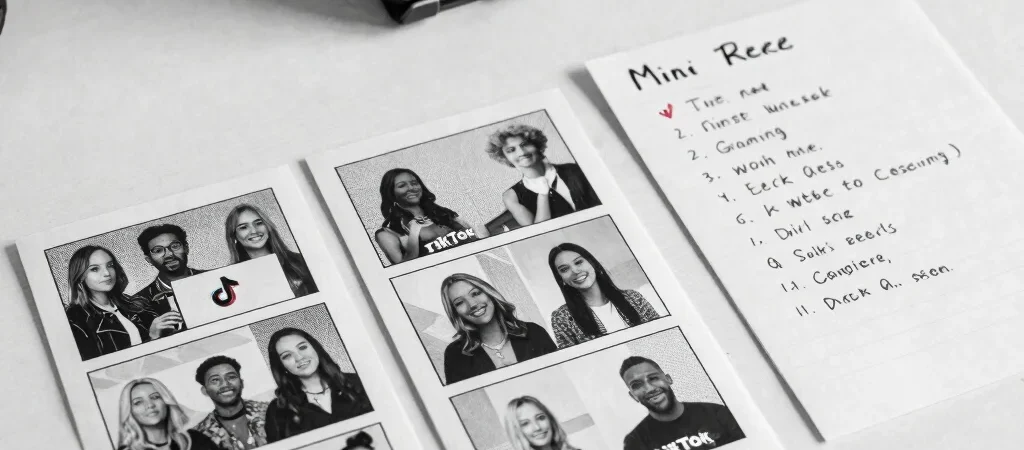
You have a useful tip, but one TikTok clip cannot always explain the context, the steps, and the common mistake. Instead of stretching one video too far, split the idea into a short series with a distinct job for each part. That makes planning easier and gives viewers a reason to follow the thread.
Choose a focused idea
Begin with one specific problem your audience recognizes, such as writing a strong opening line for a tutorial. List the questions around it: what makes an opening clear, what weakens it, and how can a creator revise one? Each answer can become a separate video, rather than cramming every point into a single take.
Batch the preparation
Draft a spoken hook, three supporting beats, and a closing thought for each video before recording. An AI tool can suggest alternate hooks or trim a draft for spoken delivery, but check that the wording still sounds natural when read aloud. Keep a simple shot note beside each script, such as a screen recording, close-up, or example on paper.
Publish with room to adjust
Record the set in one session if the setup suits you, then leave time to add captions and review each clip on a phone-sized screen. Schedule or publish using the options available to your account, and check the platform's current tools rather than assuming every account has the same features. After the first post, use viewer questions and retention patterns as clues for what the next installment should clarify.